Stands Up to Ponding Water
Silicone is moisture-cured, so once it sets it takes on no more water. Standing water that destroys other coatings does not break it down.
On a flat or metal roof with dry insulation and solid decking, a properly prepped silicone or elastomeric system seals the details, reflects heat, and adds years — at a fraction of a replacement.
(224) 604-6508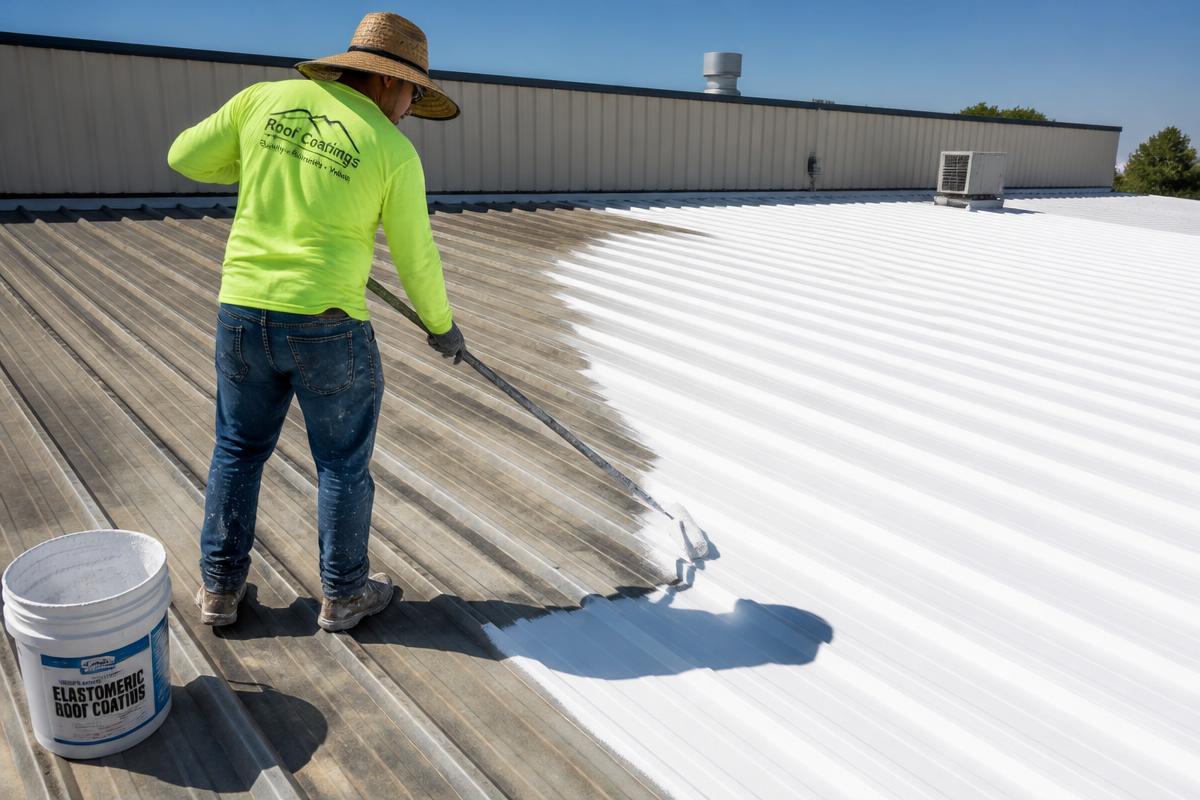
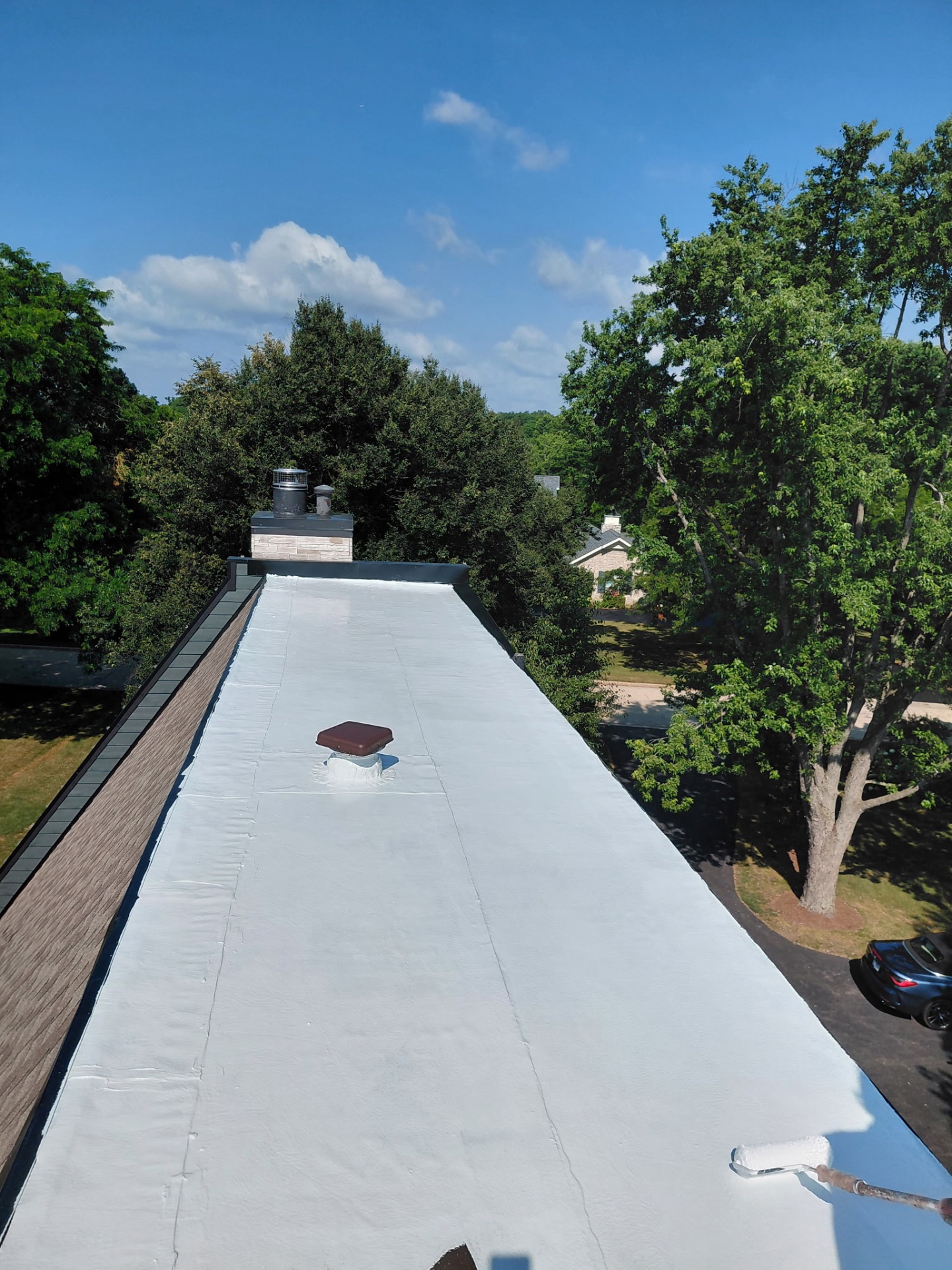
High-Solids Silicone 412™ is the system we put on flat roofs that hold water. It cures into one seamless, bright-white membrane that shrugs off ponding and UV and stays flexible for years, so there are no seams left to open back up.
Acrylic elastomeric is the cost-effective bright-white option on sloped metal and well-drained membranes. Either way, curbs, drains, laps, and penetrations get reinforced with fabric before the field coat goes on.
Coating over wet insulation, soft decking, or field-wide seam failure buys a season and hides the damage. We take core samples first, and if the roof underneath is not worth saving we tell you that and quote the system it actually needs.
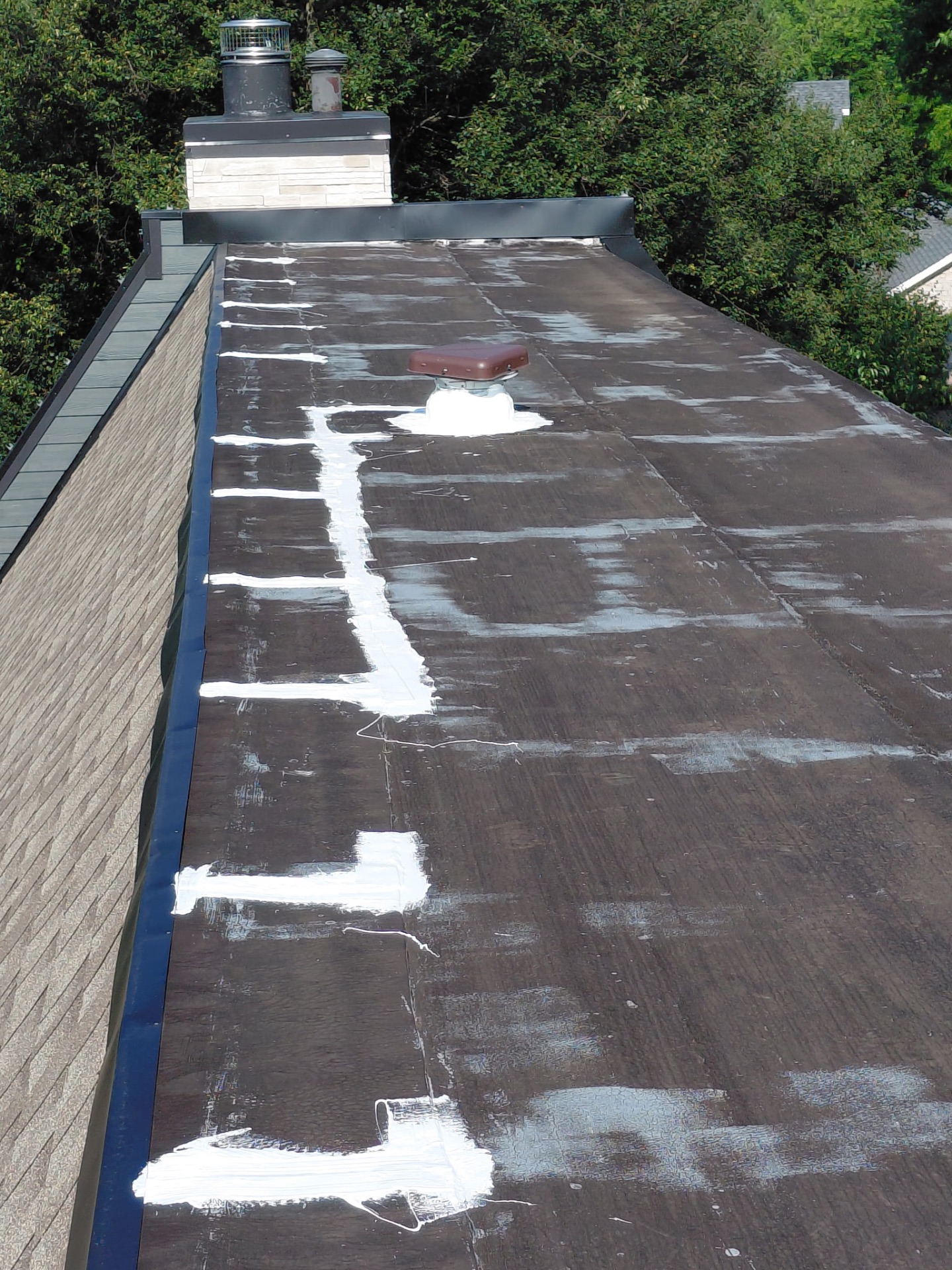
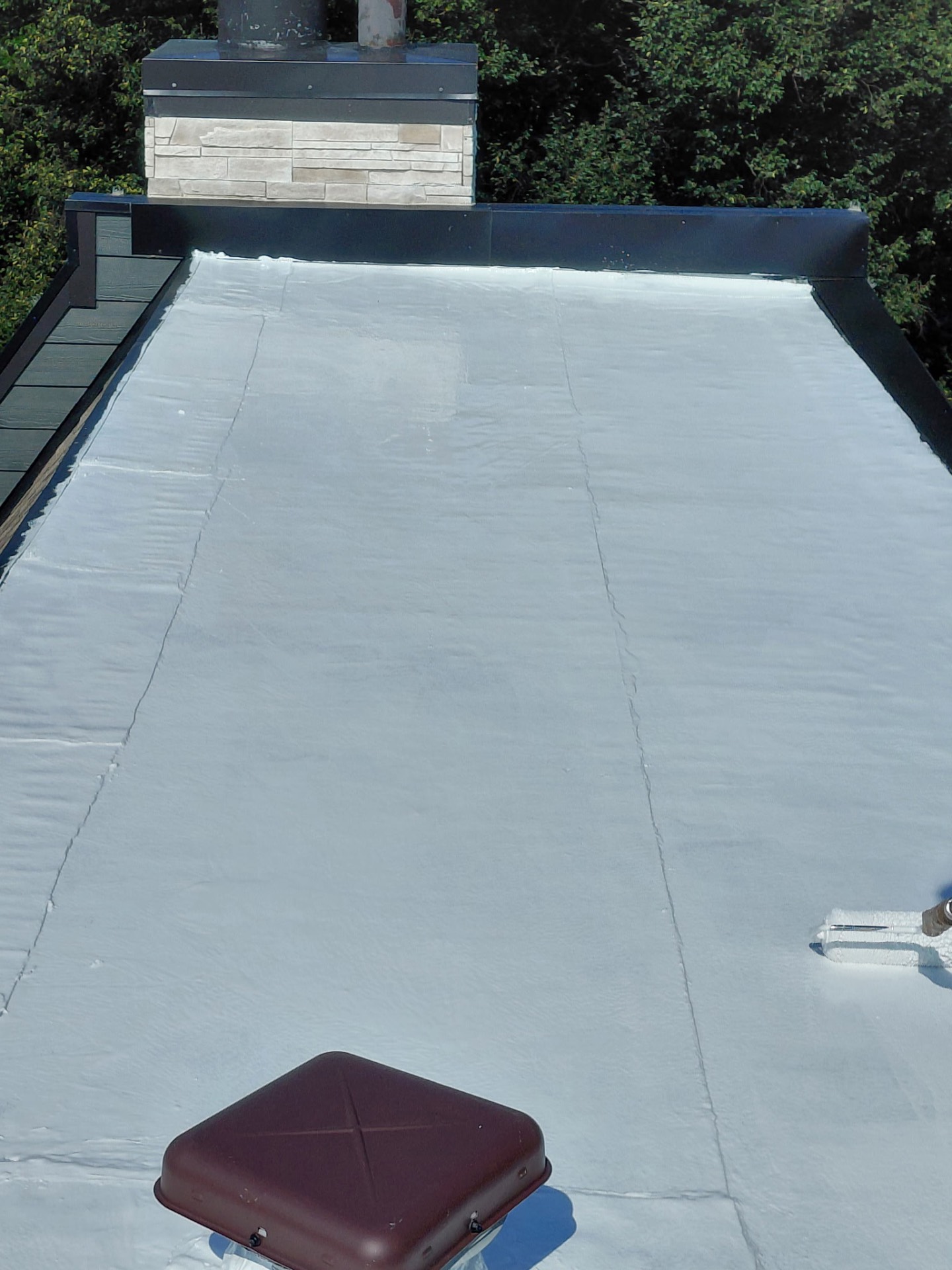
Patched seams and a tired membrane on the left, the same roof after prep and a full reflective coat on the right.
Silicone restores and protects almost every commercial roof surface — metal, modified bitumen, single-ply, EPDM, TPO, built-up, concrete decks, and spray foam.
Silicone is moisture-cured, so once it sets it takes on no more water. Standing water that destroys other coatings does not break it down.
A bright reflective roof cuts cooling costs and eases the load on HVAC in summer. Silicone will not chalk, crack, or degrade in constant sun, and it erodes far slower than other elastomerics without turning brittle.
It cures into one seamless, impermeable membrane that handles wind-driven sand, oxidation, extreme temperature swings, and the natural expansion and contraction of a large roof.
Modern formulations run over 90% solids, so the required dry thickness is reached with less material and fewer passes — less time and labor with no shortcuts.
Surface readings on the same roof commonly drop from around 135°F before coating to the mid-90s after, which lowers indoor temperatures and extends roof life.
High-solids silicone is solvent-free with extremely low VOCs, meeting or exceeding state material safety standards in all 50 states.
Call and tell us what the roof or exterior is doing. We look it over, photograph it, and put your options in writing.
(224) 604-6508